Where does it hurt, exactly?
Select the area that’s bothering you, either on the body or from the list. Each of the twelve areas shows the treatments we use for it and why. You don’t need to know which one you need before you arrive. That’s what the consultation is for.
Select an area
Nineteen points across twelve treatment areas, front and back.
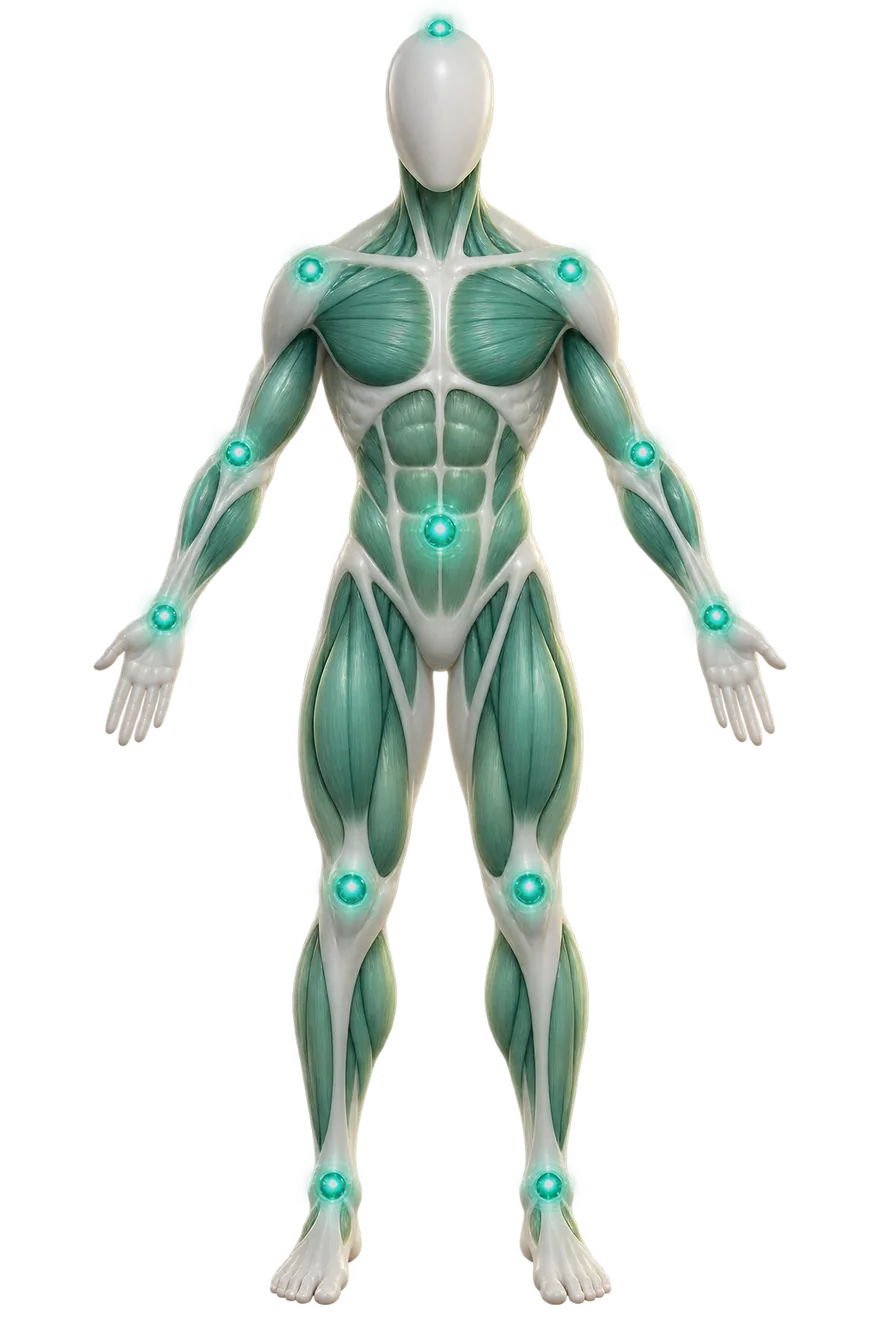
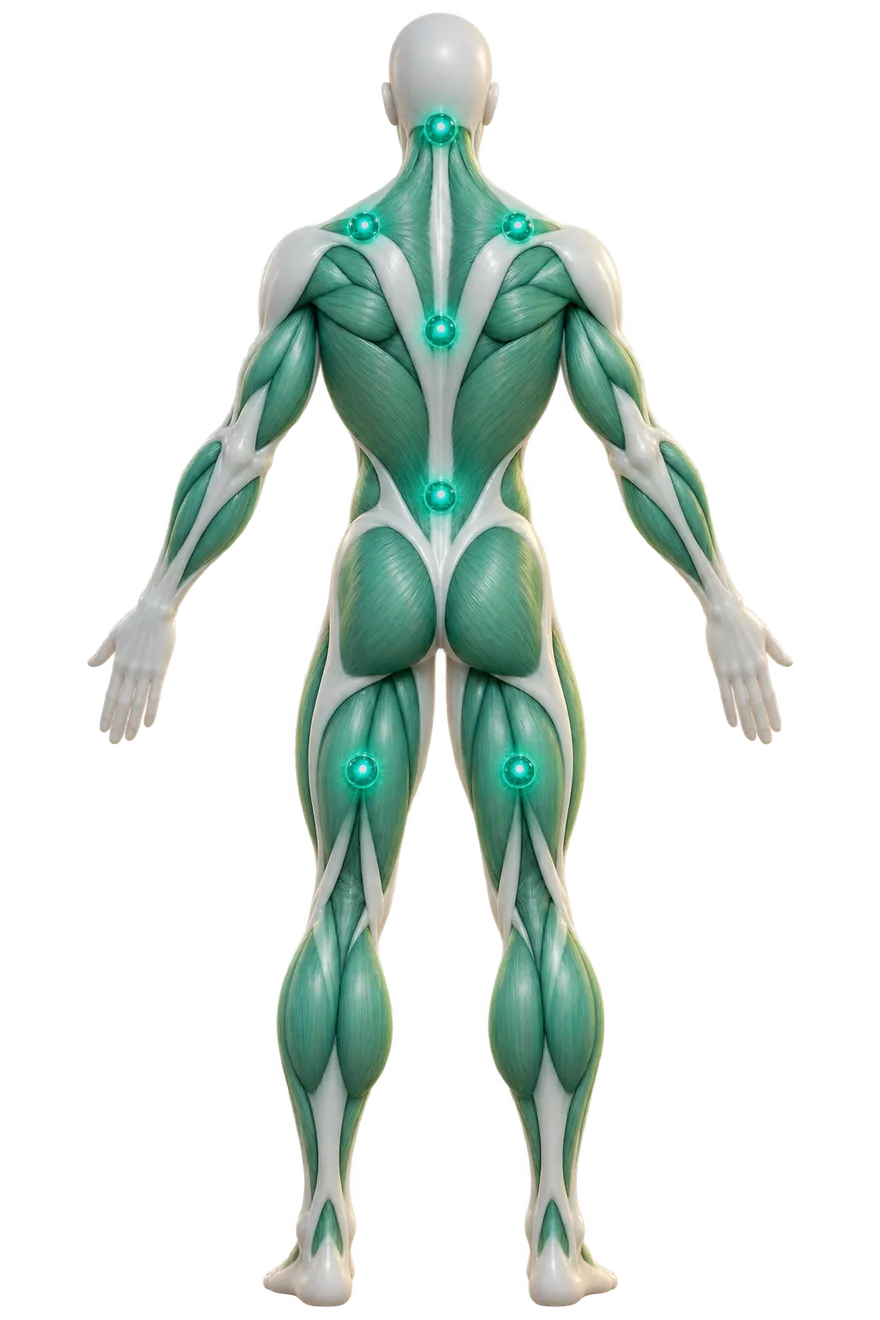
Select a glowing point, or pick a zone from the list
Twelve treatment zones.
One personalized plan.
Each zone maps to the therapies we actually use for it. Select a glowing point on the body, or choose from the list. Switch to the back view for the spine, traps and hamstrings.
All twelve areas
Prefer a list? Select any area below and the map above will move to it.
Not sure where to start?
Pain often starts somewhere other than where you feel it. A tight lower back can come from the hip, and a headache that won’t lift can come from the jaw, the neck, or simply poor sleep. Where it hurts is a good place to start the conversation.
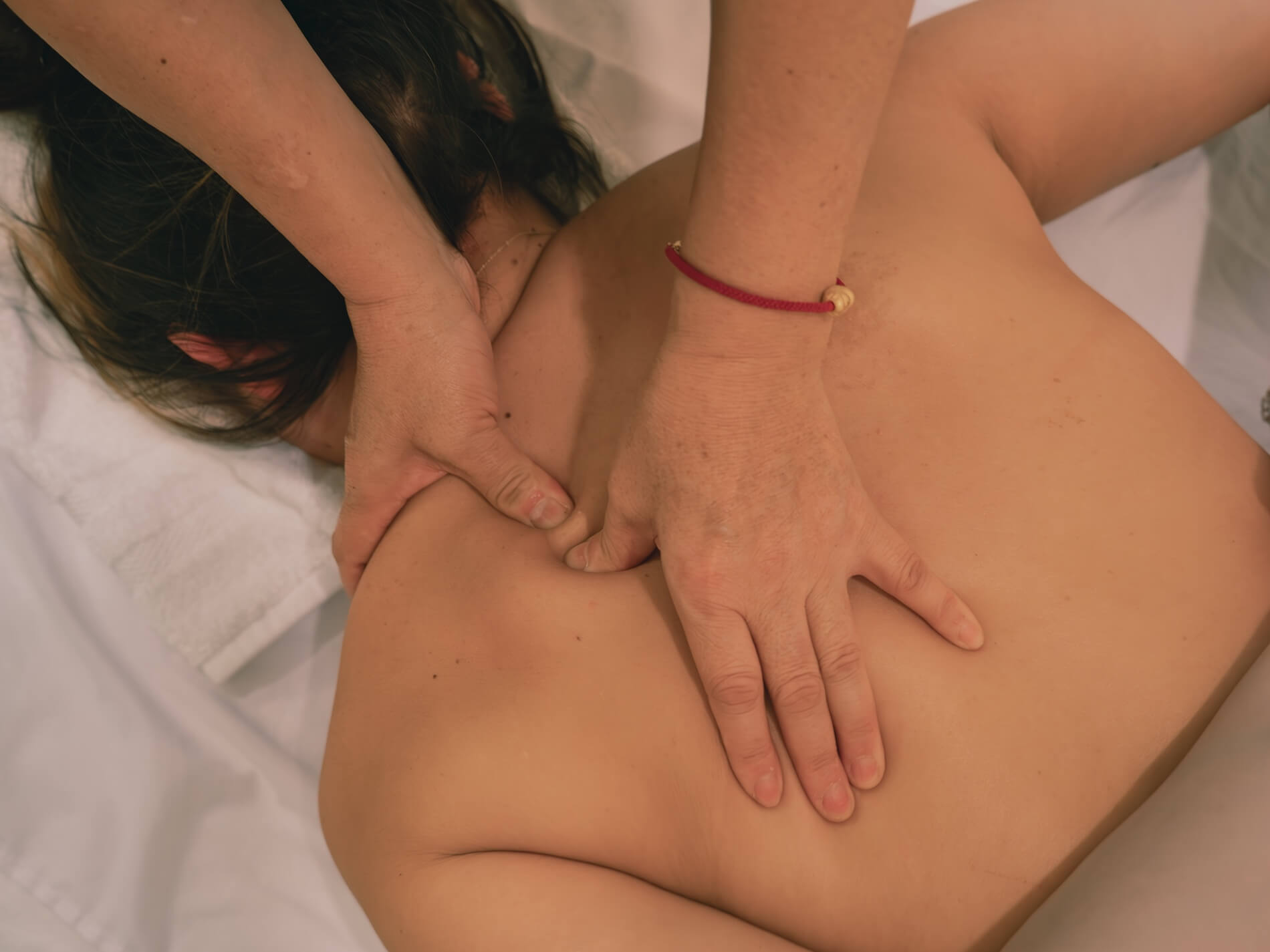
That’s why every appointment starts with an assessment. Your therapist will listen, check how you move, and feel what the tissue is doing before recommending which of the twelve treatments, usually two or three together, will help most.
Combining treatments costs nothing extra. Two services fit into 60 minutes, three into 90, four into 120, all at the same price as a single treatment of that length.
What to expect
Here’s what happens between walking in and walking out.
Tell us where it hurts
In your own words. You don’t need any terminology, and you don’t need to have used the map first. It’s there to help, not to test you.
We find the cause
Your therapist checks range of movement, tissue quality, posture and the history behind it. This is what separates medical massage from an hour at a spa.
We build the session
Usually a combination: Tui-Na to open the area, cupping or gua sha to release it, moxibustion or acupuncture to hold the change.
You leave with a plan
You’ll know what to do between visits, what to avoid, and honestly how many sessions this is likely to take. Sometimes the answer is just one.
Ready when you are
Every visit starts with a consultation, so you never need to know which treatment you want before you walk in. New clients get twenty percent off their first appointment.